Dealing With Collections and Charge-Offs
A collection account or charge-off can narrow your financial choices. The first step is understanding the entry itself — what it means, and what choices you actually have.
A collection account or charge-off usually shows up after a debt goes seriously past due — or after it is handed to a third party for collection. They can complicate almost any application — a car loan, a mortgage, a lease — and the problem gets worse when the account is unfamiliar, the amount looks wrong, or the status does not match what you know.
We sit down with each collection account and charge-off on your reports — the account details, how the entry is reported, whether the information looks accurate. No one can promise a collection entry will be removed or a creditor will change its reporting: accurate information generally stays, even when it is unfavorable.
These are actual results from past clients, previously shared on Instagram. Every credit file is different, so treat these as examples of what the process can look like, not as a promise of what yours will do.
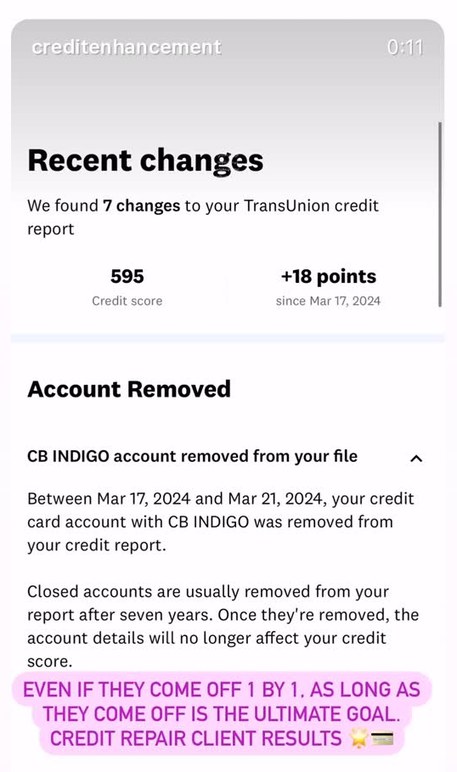
CB Indigo account removed; TransUnion score 595, up 18 points, March 2024.
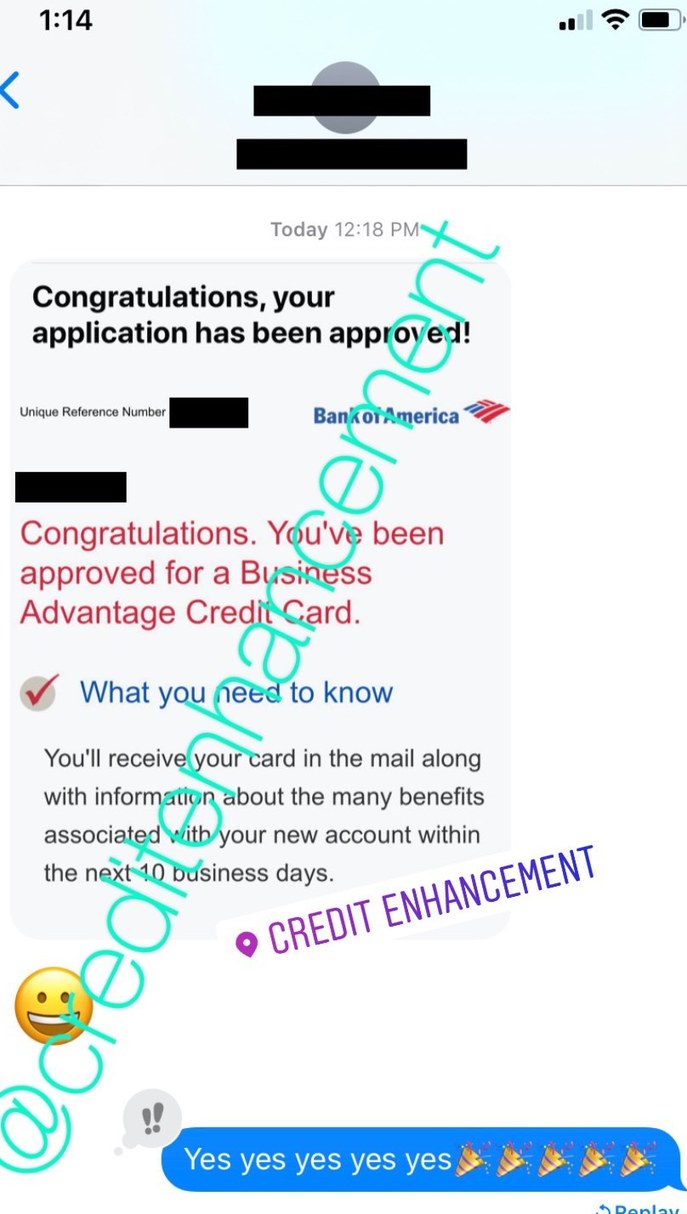
A client was approved for a Bank of America Business Advantage Credit Card in May 2020.
Results vary from person to person and depend on what is in each credit file. Nothing here promises a particular score increase or deletion.
A collection entry is hard to deal with when you cannot see it — the balance, the dates, who is reporting it. For a dollar, you can read every collection entry on all three reports and see the facts as the bureaus list them.
Facts first, then a plan. The look costs a dollar.
$1 opens 7 days with MyScoreIQ and the price after that week is $34.99 a month. Cancel any time.
Collection accounts and charged-off debts don't all look the same. We help you understand the differences between them and spot accuracy problems.
For each collection account, we look at the reported creditor, who owns the account now, the balance shown, and the account status.
A charge-off and an active collection account are not the same thing. We explain what each term means in credit reporting.
We look at reported balances, payment history, and the dates tied to each entry, and check them against your own records.
Not every entry is a good candidate for a dispute. We go over whether an entry has inaccurate information that could support a challenge to the bureau or the furnisher.
We help you think through responsible ways to communicate with creditors, review payment arrangements, and keep accurate records of everything you do.
Collection accounts can involve different creditors, balances, and reporting histories. Getting the details straight comes first — before you do anything.
Finding inaccurate information is where we focus — not on suggesting that every collection entry can be removed.
We go over common collection terms with you and help you get ready for conversations with creditors or collectors.
We talk through the collection or charge-off entries showing on your credit reports, one by one.
We help you review account ownership, balances, dates, and reporting status — each detail, checked.
We help you pick out information that appears inaccurate, incomplete, or inconsistent with your records.
We explain dispute options, communication strategies, and practical credit habits for going forward.
When a collection entry has wrong information in it, challenging it through the bureau or the furnisher can be the right move. Accurate collection entries, though, generally stay on the report even when you wish they wouldn't.
Paying can change how the entry is marked, but payment alone does not take it off your report. The reporting rules decide how long accurate information remains.
Understand the account details and your rights before you respond. We can talk through common collection terms and what to consider before you call anyone back.
The dispute itself works the same way: if the entry contains inaccurate information, that may be challenged through a factual dispute. Accurate charge-off information generally cannot be removed simply because it is unfavorable.
A collection on your report isn't the final word on your finances. Let us talk through what you can do. Call (469) 281-1250.