Dallas, Texas Credit Repair

Denied Is Not the End of the Story

Rejected for the home loan? Your file is worth a look before the next application.

Denied for the apartment? Equipment financing stalled? Told no on the credit card? We read your reports line by line, explain what we find in plain English, and talk through what can actually be done about it.

No obligation — you decide whether to go further.

Your Credit File Is Worth a Careful Look

A car loan that gets turned down at a dealership on Northwest Highway, a mortgage that stalls before closing on a house in Plano or Garland, an apartment application that comes back no in Deep Ellum — each one can set your plans back months. And even when you do get approved, a weak credit profile can mean a higher rate and a bigger payment for years. When the problem is information on your reports that is wrong, that information deserves a second look. Dallas Credit Repair helps people across the Dallas–Fort Worth area see exactly what the bureaus are reporting about them, and figure out what to do next.

All of it happens by phone or online — no office visit, no mailed paperwork unless a dispute calls for it. We read through your reports with you, point out entries that look wrong or unfamiliar, explain what a collection account or charge-off actually means, and talk about the habits that keep a file in better shape. We are straight about the limits: information that is accurate and correctly reported generally stays, however much you would rather it didn't. What we go after is information that is wrong.

Most people who reach out have something specific in mind — a first home in Richardson or Mesquite, a dependable vehicle for the drive down Central Expressway, an apartment closer to work downtown, a lower rate on a loan they already have. Others just want to understand why their score sits where it does. Whatever brings you here, the first move is the same — a careful look at all three reports, so you can see what lenders see. From there we talk about what looks inaccurate, what is accurate and will remain, and what your realistic options are. If that sounds like a useful place to start, you can begin with a credit report review or request a consultation and describe your situation in your own words.

A First Look at Real Results

These are actual results from past clients, previously shared on Instagram. Every credit file is different, so treat these as examples of what the process can look like, not as a promise of what yours will do.

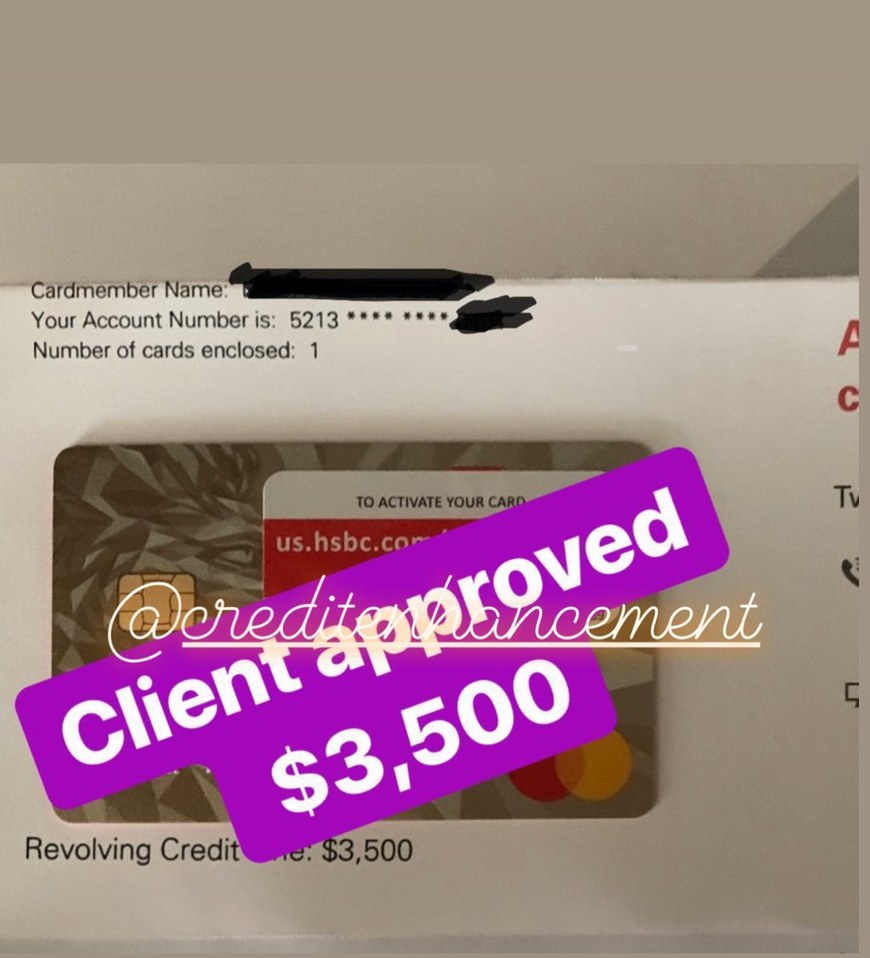
Dallas credit repair result: HSBC card approval letter showing a $3,500 revolving credit line

HSBC card approval: 3,500 dollar limit

Client approved for an HSBC card with a revolving credit line of 3,500 dollars, June 2019.

See it on Instagram →

Dallas credit repair result: USAA Rewards American Express approval email showing a $15,000 credit limit

USAA American Express approval: 15,000 dollar limit

Client approved for a USAA Rewards American Express card with a credit limit of 15,000 dollars, June 2019.

See it on Instagram →

Dallas credit repair result: Equifax score 704, up 80 points, with six MOHELA student loan accounts removed

Equifax 704: six student loans removed

Equifax score up 80 points to 704, with six MOHELA student loan accounts and other entries removed, April 2020.

See it on Instagram →

Results vary from person to person and depend on what is in each credit file. Nothing here promises a particular score increase or deletion.

Denied the Loan, the Lease, or the Keys? See What's on Your File for $1

A no from a lender almost never tells you why — the dealership just moves on, the underwriter just stalls, the landlord just picks someone else. The answer is usually sitting in your credit file, and a dollar lets you read it for yourself: your scores and entries from Equifax, Experian, and TransUnion, side by side, before you apply anywhere again. Nobody to hire, nothing to commit to — just your own numbers, so the next application starts with facts instead of a guess.

Look at My Scores

Seven days of access through MyScoreIQ costs $1, then $34.99 a month after that. Cancel anytime.

Three Steps, No Pressure

Three steps, in plain language, and you can stop after any one of them.

Step 1: Read Your Reports

We go through what Equifax, Experian, and TransUnion are reporting about you, and explain it in everyday words — what is helping your profile, what is hurting it, and what looks wrong. You see exactly what we see, and we answer your questions before anything else happens. Learn about the review →

Step 2: Challenge What's Wrong

Where entries look inaccurate, incomplete, or unsupported, we prepare disputes that aim at the exact problem — a wrong balance, a wrong date, a duplicate entry, an account that is not yours. Every dispute names the specific error and explains why it is wrong. Learn about error correction →

Step 3: Build Better Habits

While disputes are underway, we help you put habits in place that protect your progress — on-time payments, manageable balances, and a real understanding of how your credit works. The goal is a file you understand well enough to keep in good shape on your own. Learn about credit building →

Every step happens by phone and online, whether you live in Dallas or in one of the suburbs around it. There is no office to visit and no paperwork to mail unless a dispute requires it — and if it does, we will walk you through exactly what is needed. Request a consultation to start with step one.

On your first call, we ask what you are working toward and what has already happened — a denial, a high rate quote, a collection notice, a score that does not look right. Then we explain what a review of your reports would cover. That first look is the starting point. Going further is entirely your call. Nothing is filed, disputed, or changed without your say-so, and you can stop at any point. That first conversation is useful either way — many people leave it understanding their reports better even if they choose not to proceed.

Credit Help Built on Straight Answers

Dallas is a city of builders — businesses opening in Deep Ellum and the Design District, families buying their first homes in the suburbs north to Frisco and McKinney, people starting careers at the hospitals, schools, and headquarters that anchor the region. Credit runs through every one of those moves, and most people never get a clear explanation of how their reports actually work. A denial arrives, a rate comes back higher than the one advertised, and the only explanation is a letter full of codes. That gap is why Dallas Credit Repair exists: we sit down with your reports, explain them in everyday words, and tell you straight what can be challenged and what cannot.

Every customer gets the same three things. We start by reading your reports — all three bureaus, entry by entry. Where the information is wrong, we help you put together a dispute that points at the exact error and explains why it is wrong. And we show you how the system works, so you can read your own reports and catch problems yourself once we are done. All of it by phone or online, anywhere in the Dallas–Fort Worth area.

Real credit repair moves slower than the ads promise, and we would rather tell you that now than sell a shortcut that does not exist. A dispute works when it points at a specific error and lays out, with facts, why the entry is wrong — that is the entire method. No magic phrases, no promised outcomes, just careful reading and explanations you can follow. You can meet the team behind the work, or browse the questions people ask us most before you call.

More about us

Five Services, One Starting Point

Each service below starts from the same place: your actual reports, not a guess about what might be on them. Choose the one that fits where you are — or begin with a review and let the reports point to the next step.

Credit Report Review

A careful pass through all three bureau reports — accounts, balances, payment history, inquiries — so you know what a lender sees when your file gets pulled.

Learn more →

Error Correction

Disputes aimed at entries that are wrong — a balance that does not add up, a date that is off, an account that is not yours — with the exact error named.

Learn more →

Collections & Charge-Offs

What a collection account or charge-off is doing on your reports, whether the details hold up, and what your options are before you respond to anyone.

Learn more →

Mortgage & Auto Readiness

A look at your credit before you apply for a home or auto loan, so you know where you stand and can deal with what is fixable first.

Learn more →

Credit Building

Day-to-day habits that make a file stronger over time — paying on time, keeping balances manageable, and checking your reports regularly.

Learn more →

Not sure which service fits? A credit report review is the usual starting point — it shows what is on your reports, and the reports usually point to what comes next. Entries that look wrong lead to error correction. Collection accounts and charge-offs get their own careful look through collections and charge-offs. A home or car purchase on the horizon calls for mortgage and auto readiness. And credit building runs underneath all of it — the habits you build now are what keep your file in good shape later.

View all services

Serving Dallas and the East Side of the Metroplex

Dallas is home base, and our phone and online services reach the whole east side of the metroplex — Plano, Irving, Garland, Richardson, Mesquite, Frisco, McKinney, Allen, Carrollton, Rowlett, Rockwall, Wylie, Sachse, Murphy, Farmers Branch, Addison, Coppell, Lewisville, Flower Mound, The Colony, DeSoto, and Duncanville.

From Frisco to DeSoto, the service is the same — a phone call or an online conversation, on your schedule. Whether you are in Dallas itself or in one of the suburbs around it, your location never limits the help available to you.

Every town below has its own page, with details about that community.

Check What Your Reports Say See all service areas

Why People in Dallas Call Us

Straight Talk About What Can Change

The first thing you get from us is an honest read of your own file — which entries might be worth challenging, and which ones are accurate and are going to stay. That saves you from paying for disputes that never had a chance.

Your Goal Shapes the Work

A first-time homebuyer in Richardson, a renter near the Medical District, and a driver who needs a reliable truck for the commute down I-35 are dealing with different pressures. We ask what you are working toward before anything else, then read your reports with that goal in mind.

A Real Person Who Knows Your File

When you call, you talk to someone who has actually looked at your reports. No script, no automated phone tree — a conversation about your situation, in words that make sense.

Everything by Phone and Online

Every service happens by phone or online, on your schedule. Whether you are in Dallas, Plano, Irving, or a smaller town in between, the help is the same — no commute, no waiting room.

You Walk Away Understanding Your Credit

When we are done, you will be able to read your own reports — what each entry means, what to keep an eye on, and when something looks off. That understanding stays with you long after any dispute is finished.

Car Loan Denied in Dallas? Let's Look at What the Lender Saw

In Dallas, a car is how life works — the drive to work down the Tollway or Central Expressway, the school run, the trip across town for groceries. A lender saying no is not always about your credit — income, existing debts, the size of the loan, and the lender's own rules all factor in. Your credit history is usually part of the decision, though, and it is the part you can actually look at and question.

Read the reports before you blame the lender. Mistakes hide in plain sight: a payment marked late that you made on time, a collection account in your name that belongs to a stranger, a balance higher than anything you owe, an account that should have dropped off years ago. A credit report review sets all three bureaus side by side so those problems are out in the open instead of buried.

The rest of the file counts too — recent applications, what you owe, whether your payments have been steady. We go over those pieces with you, so the next application rests on facts instead of hope. What we will not do is promise a lender will approve you or offer a better rate — that call belongs to the lender, not to us.

Start with the denial notice. Lenders usually spell out the main reasons for the decision, and those reasons tend to point back to specific entries on your reports. A credit report review sets the lender's reasons next to what Equifax, Experian, and TransUnion are actually reporting — and that comparison shows whether you are dealing with a mistake, an outdated entry, or an accurate record that calls for a different approach.

And hold off on applying again right away. Each new application adds an inquiry to your file, and another denial only makes the next one harder. The better order is to review your reports, challenge anything that looks wrong, and then apply with a clear picture of what lenders will see. Our mortgage and auto readiness service walks through that preparation step by step.

Check What Your Reports Say

Buying a Home in Dallas? Check Your Credit Before the Lender Does

A home is the biggest purchase most people ever make, and a mortgage application puts your credit under a microscope. A collection account, a late payment, or a balance that looks wrong can slow everything down — and the lender weighs those entries next to your income, your debts, your savings, and the loan program itself.

Find out what is on your reports before the underwriter does. We go over your accounts with you, flag information that looks inaccurate, and talk through practical ways to deal with outstanding obligations — so the mortgage process holds no surprises.

Here is the honest part: entries that are accurate and correctly reported do not come off just because they are in the way. A payment that really was late, or a collection that really is yours, stays on the record for as long as the reporting rules keep it there. A realistic home purchase plan starts from knowing which entries fall on which side of that line.

A mortgage lender looks past the number. Payment history, balances, how old your accounts are, anything on the reports that raises a question — all of it gets weighed next to your income, debts, and the loan program. The smart move is to start months before you apply: that gives inaccurate entries time to move through the normal dispute process, instead of turning up the week before closing. Our mortgage and auto readiness service is built around that kind of early preparation.

Mortgage preparation keeps turning up the same surprises: a collection account that resurfaced after years, one debt reported twice under different names, a balance that does not match what you owe, an account that belongs to someone with a similar name. Each one is worth a closer look through error correction — a factual dispute starts by naming exactly what is wrong, not by mailing a generic letter.

Check What Your Reports Say

Approved — But the Rate Stings? Your Reports May Be Part of It

Getting approved is only half of it — the rate decides what the loan really costs you. A high rate can add hundreds to a monthly payment and thousands over the life of the loan. Lenders set rates by their own rules, and your credit history is often one factor among several, along with balances, late payments, and collections on your reports.

A review of your reports shows the information that may be shaping the rate you are offered. We flag entries that look inaccurate, explain utilization in everyday words, and go over how your payment history and recent applications fit into the picture.

No single change promises a better rate. Lenders weigh factors differently, and market conditions move rates for everyone. What better information gives you is a clear sense of what is in your hands and what is not — so the next application rests on facts, not guesswork.

Nearly every rate conversation comes back to the same two things: whether your payments have been on time, and how much of your available credit you are using. A late payment from years ago can still weigh on a profile, and balances near your limits can look risky even when every payment is current. Our credit building guidance covers both — how steady payments and manageable balances work together, and what to watch as your profile improves.

And check all three bureaus, not just one. The same account can read differently at Equifax, Experian, and TransUnion — a different balance, a different date, or an account that shows on one report and not the others. A credit report review covers all three, so nothing slips past because it only appeared in one place.

Collections or Charge-Offs on Your Report? Know What You Are Looking At

Finding a collection account or charge-off on your report is stressful, especially when the account is unfamiliar or the amount looks wrong. Before you decide anything, get the details straight — who the original creditor was, how much is claimed, when it was reported, and who owns the account now.

Collection entries are not always right. A balance can be off, dates can be wrong, the same debt can show up twice, or the account can belong to someone else entirely. When the facts are wrong, a dispute with the reporting agency or the information provider may be the right move. When the facts check out, the entry generally stays — accurate information is not removed just because it is inconvenient.

A collection, a charge-off, and a late payment are three different things, reported three different ways — we help you tell them apart. We also talk about the habits that keep new problems from starting: reading your statements, keeping track of due dates, and reaching out to creditors early when money gets tight.

Before you respond to any collector, know exactly what is being claimed — the original creditor, the amount, the dates, and whether the account is actually yours. Debts get sold from one collector to another, and the same account can turn up more than once along the way. Our collections and charge-offs service goes through each entry with you, so you understand what you are facing before you decide what to do.

A charge-off and a collection often show up together, but they are not the same thing. A charge-off means the original creditor wrote the account off its books; a collection means another company is now trying to collect it. Either one can hold errors — a wrong balance, a wrong date, the wrong person — and when the reported facts are wrong, error correction is how you challenge them.

Good Habits Are the Part That Lasts

Fixing errors matters, but it is only half the job. The other half is learning how credit works well enough to make good decisions on your own. The same factors that drag a profile down can lift it back up: payment history, amounts owed, account age, the mix of account types, and how often you apply for new credit.

The habits themselves are straightforward: pay on time, keep revolving balances manageable, read your statements, and skip accounts you do not need. None of that promises a particular score or a lending result — but it is the ground every strong credit file is built on, whether or not you have disputes in progress.

You should come out of a conversation with us understanding your credit better than when you went in — plain explanations of your reports, a clear picture of the reporting problems to watch for, and choices you actually understand.

The scoring models lenders use most weigh the same handful of factors: payment history first, then the amounts you owe, how old your accounts are, recent credit activity, and the mix of account types. Payment history carries the most weight — one missed payment can matter more than people expect, and a long run of on-time payments is the backbone of any lasting improvement. Our credit building service goes over each factor without the jargon.

Building credit takes time, and anyone selling instant results is selling something that does not exist. The work is straightforward but takes discipline: pay on time, keep balances in check, review your statements, and avoid accounts you do not need. A credit report review shows where you stand today, so the habits you build aim at the right problems.

Check What Your Reports Say

Credit Help Across the Dallas–Fort Worth Metroplex

Dallas was founded in 1841 by John Neely Bryan and incorporated on February 2, 1856. It is the seat of Dallas County. Today it is the ninth-largest city in the United States and the third-largest in Texas, with about 1.33 million residents — and it anchors the Dallas–Fort Worth metroplex, the fourth-largest metro area in the country at more than 8.4 million people. Eleven Fortune 500 companies keep their headquarters inside the city limits, including AT&T, Texas Instruments, and Southwest Airlines. Dallas/Fort Worth International Airport (DFW), on the western edge of the metro, is one of the largest and busiest airports in the world. That scale is why credit matters so much here: the region's workers buy homes, finance vehicles, and sign leases at a pace few American cities match.

The city has plenty of landmarks worth knowing. The State Fair of Texas has run at Fair Park since 1886, and Fair Park holds the largest collection of Art Deco architecture, sculpture, and murals in the country — a National Historic Landmark since 1986, and home to the Cotton Bowl. Reunion Tower, the 561-foot geodesic ball on the downtown skyline, opened in 1978. The Dallas Arts District covers 68 acres, the largest contiguous arts district in the United States, with the Meyerson Symphony Center, the Winspear Opera House, the Nasher Sculpture Center, and the Dallas Museum of Art. Deep Ellum has been the city's live-music heart for generations, and Pioneer Plaza's bronze cattle drive — 49 longhorn steers and three cowboys — sits a few blocks from City Hall. White Rock Lake, the Katy Trail, NorthPark Center, and the Galleria give the city its daily rhythm, while Southern Methodist University (SMU) in University Park and UT Southwestern Medical Center anchor its education and health care.

That is why our services cover the whole east side of the metroplex, not just one part of it. Whether you live in Dallas itself, in Plano or Irving, in Garland or Richardson, in Mesquite or Frisco, or in one of the smaller communities like Sachse, Murphy, Wylie, or Duncanville — you can reach us by phone or online, and the work is the same. There is no office to visit, so your town never limits the help available to you. See the full list on our service areas page.

The goals are familiar across the metroplex: buying a first home, financing a reliable vehicle for work, renting an apartment near the job or downtown, or qualifying for a better rate than the one you have now. Each of those goals runs through your credit reports, and each one benefits from knowing what is on them before you apply. Our mortgage and auto readiness service is built for exactly that preparation, and a credit report review is where it starts. The region's workforce shapes the credit stories we hear: shift schedules, job changes, corporate relocations, and the stop-and-start of gig and contract work all leave marks on a credit file, and some of those marks are errors worth a second look. Wherever you work in the metroplex, a credit report review starts with your file, not a template.

Real Results From Real Clients

These are actual results from past clients, previously shared on Instagram. Every credit file is different, so treat these as examples of what the process can look like, not as a promise of what yours will do.

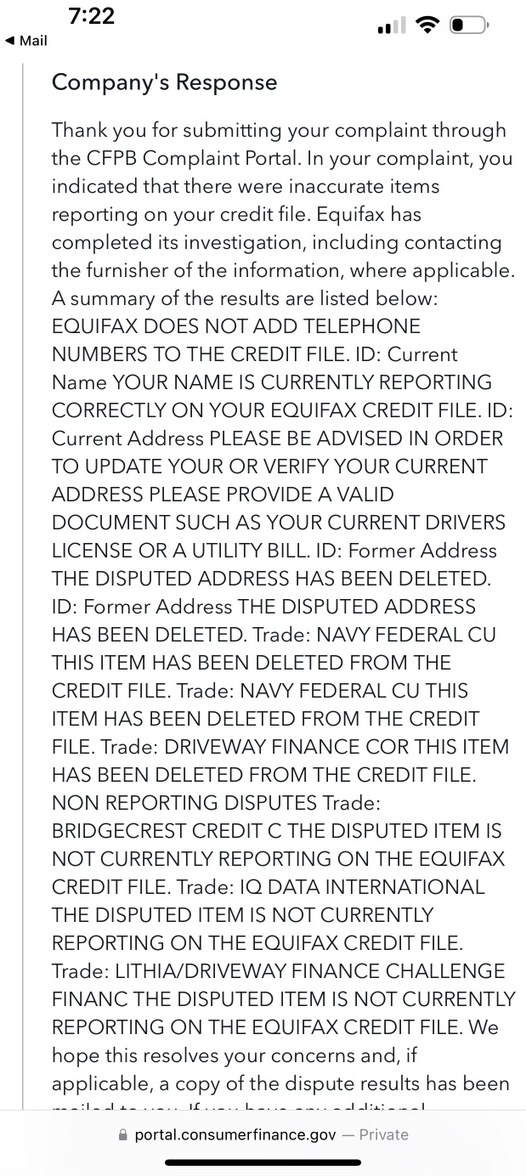
Dallas credit repair result: Equifax response showing two Navy Federal accounts and a Driveway Finance account deleted

Equifax deletions after a CFPB complaint

Equifax deleted two Navy Federal accounts and a Driveway Finance account after a CFPB complaint, March 2024.

See it on Instagram →

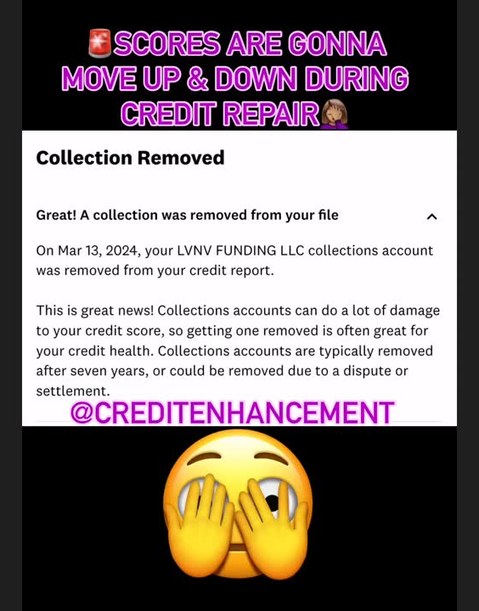
Dallas credit repair result: Credit report update showing an LVNV Funding collection removed

LVNV Funding collection removed

LVNV Funding collection removed from the report, March 2024.

See it on Instagram →

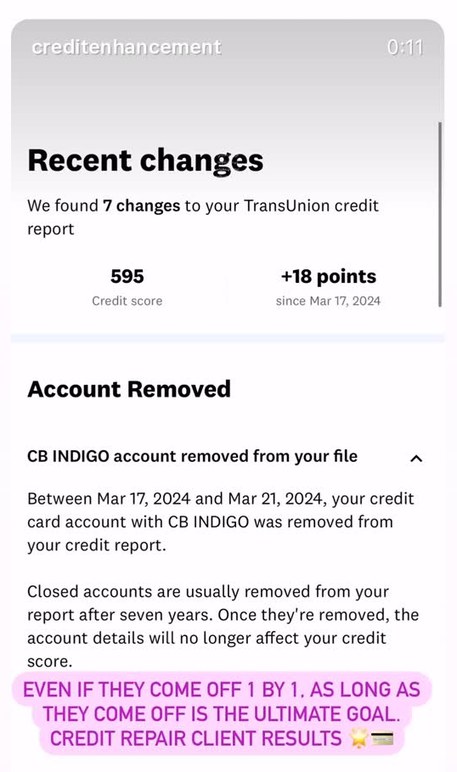
Dallas credit repair result: TransUnion report showing a CB Indigo account removed, score 595, up 18 points

CB Indigo account removed

CB Indigo account removed; TransUnion score 595, up 18 points, March 2024.

See it on Instagram →

Dallas credit repair result: Three bureau scores in the 720s after an authorized-user tradeline was added

Authorized-user tradeline: 0 to the 720s

Authorized-user tradeline added: Equifax 722, Experian 736, TransUnion 751 from no credit history, February 2024.

See it on Instagram →

These are real results from past clients. Results vary from person to person and depend on what is in each credit file. Nothing here promises a particular score increase or deletion, and accurate negative information generally cannot be removed. Client names and account numbers have been removed from these images.

See all results →

Questions People in Dallas Ask Us

The dealership said no — is my credit the reason?

A denial usually has more than one cause — income, existing debts, the loan terms, and the lender's own rules all play a part. Your credit reports are one piece of it, and the piece you can actually inspect: an error on a report can quietly shape the outcome. A review shows you what the lender saw. Our mortgage and auto readiness service walks through that preparation with you.

My mortgage fell through. Can a credit review help me try again?

A review of your reports can show whether inaccurate entries, outstanding balances, or something unfamiliar played a role. Approval also turns on your income and debts, the savings you have available, which loan program you applied under, and the lender's own standards — the reports are only part of the picture, but they are the part you can check and question. Our mortgage and auto readiness service covers that preparation in detail.

Why is the rate I'm offered always higher than the advertised rate?

Lenders price loans by their own rules, and the advertised rate usually assumes a borrower profile you may not match. Your credit history is one input among several — outstanding balances, payment patterns, and the loan terms matter too. What a review can tell you is whether the information behind the quote is accurate. A credit report review is the place to start that check.

A collector is on my report. What are my choices?

Start by getting the facts straight: who the original creditor was, how much is claimed, when the account was reported, and whether it is even yours. An entry with wrong facts may be challenged; an accurate entry generally stays, because accurate information is not removed for being unfavorable. Our collections and charge-offs service goes through each entry with you before you decide anything.

There's a late payment I don't think I made. Can that be challenged?

It comes down to whether the report is right. A payment that went out on time but shows as late, a date that is off, or a late mark tied to the wrong account may be worth disputing. A payment that really was late, reported the way it happened, generally stays on the record — a legitimate accuracy dispute cannot take it off. Our error correction service handles disputes of this kind.

How many credit applications is too many?

There is no fixed number — it depends on the lender and on your overall file. Hard inquiries from applications can affect your score; looking at your own reports is a soft inquiry and usually leaves your score alone. Several mortgage inquiries close together are sometimes counted as a single inquiry by the scoring models. A credit report review lists every inquiry on your file.

I lost my car to repossession. What happens next with my credit?

A repossession may appear on your credit reports and shape how lenders judge future applications. When the entry itself has errors — wrong dates, a balance that does not match, or an account that is not yours — a factual dispute may be the right move. Our collections and charge-offs service can help you understand what is listed.

Are my student loans helping or hurting my credit profile?

Both ways. Steady on-time payments can strengthen a file, while missed payments or heavy balances can weigh it down. Your reports show the payment history, the balances, and the status of each loan — and when any of those details are wrong, a factual dispute can challenge them. Our error correction service handles that kind of dispute.

Bankruptcy is behind me. How do I move forward with my credit?

A bankruptcy can stay listed on your reports for a stretch of years set by the reporting rules. We can go over what is actually on your file and talk about the habits that matter in the years after. Our credit building service is built around that longer view.

A judgment from an old case is on my file. Is there anything to do?

Sometimes — it depends on the reporting rules and whether the public record information is available to the bureaus. When a judgment on your report has wrong facts in it, a dispute may be appropriate. Our error correction service can take a closer look at it.

My report has an account I've never seen before. What now?

You have the right to dispute it — with the credit reporting agency, or with the company that put the information there. A strong dispute names the exact entry and explains, in specific terms, why it looks wrong. Our error correction service puts together disputes that are clear and fact-based.

I have no credit history at all. What's the first step?

It starts with accounts that report to the bureaus, managed well over time. We can talk through which kinds of accounts, which payment habits, and which practices help a new file take shape. Our credit building service lays out how those pieces fit together.

See all frequently asked questions →

Ready to Know Where You Stand?

Knowing what is on your file comes first. Call (469) 281-1250 or request a consultation online, and we will take it from there.

Call (469) 281-1250

Call (469) 281-1250Check What Your Reports Say